"WHAT A LIFE"
2008 for the German Historical Museum
Born in 1943 into the "fatherless generation," Herbert Koerner, his older sister, and his younger brother became war orphans. Their escape from Danzig ended in Hesse. The family lived in cramped quarters in Bad Hersfeld. Their mother toiled to feed their three children, even working evenings as a door-to-door salesperson. Little time remained for parenting; the children had to take on responsibility from an early age. Herbert's character traits were fearlessness, an unpredictable curiosity, a strong will, and a pronounced thirst for freedom. An explosive mix! He literally "goes headfirst into things." Friction in family life and at school was inevitable. Punishments didn't restrain him; instead, they fueled his imagination, fueling his attempts to escape them. Sometimes he flees to the roof of the school, disappears into the sewer, or hides in the kennel of a guard dog, which now protects him from further “attacks” by the adults by barking.
In 1953, Herbert was ten years old. His report cards were only satisfactory, and his teachers wanted to break his independence and make him compliant. His mother, Margarethe, saw her parenting failing and agreed to his placement in the children's home for orphans and troubled youth in Buchenau, Biedenkopf district. Naturally, Herbert made a splash there as well: the regular collection drives for non-ferrous metals gave him the idea of putting some money into his empty pockets. His resourcefulness naturally sought the most lucrative solution, and so he promptly dismantled the children's home's lightning rod system to turn it into cash. Another confrontation ensued.
Shortly after his admission to the children's home, Herbert was already facing expulsion. But the boy was lucky and found an advocate in the home's director, Ottilie Achenbach. This woman recognizes the boy's potential, knows how to distinguish between malice and boisterous exuberance, attends to his needs, fosters his passion for geography, natural history, and drawing, and simply understands how to channel his excess energy into interesting areas of activity. His school reports from this period clearly document this development. Buchenau was Herbert's home for two years, and the statement by the grown man that these years were the happiest of his childhood is both thought-provoking and touching.
But as so often happens, once labeled, always labeled. Back in Hersfeld, the teachers doubted his recommendation for grammar school, exerted the old pressure, his grades worsened, and after finishing elementary school, Herbert began an apprenticeship as a machine fitter in Kassel. But after barely a year, he felt a sense of routine and confinement. Herbert saw the only way to satisfy his yearning for freedom in seafaring, and at 15, he traveled to Hamburg without his family's knowledge to sign on. Astonished and amused at the same time, this impetuous young man was informed that such an undertaking still required parental consent. Back in Hersfeld, he obtained his mother's signature, and shortly thereafter, in 1959, his first voyage took him across the Atlantic as Moses on the old "cockroach steamer" MARGA, owned by the Willy H. Schliecker shipping company.
But even on this voyage, Herbert realized that without training, one always occupies one of the lowest positions in a hierarchical society. He left the military and went to Hamburg to look for an apprenticeship. His past and his impetuous nature didn't exactly open doors for him. To put it bluntly: he was mostly rejected.
Just like back in the Buchenau children's home, his professional career was once again connected to someone who recognized the young man's potential. Max Bednarz, the father of journalist Klaus Bednarz, was then the training manager at the Stülcken shipyard in Hamburg. His intercession enabled Herbert to begin an apprenticeship as a ship engine mechanic, which he successfully completed in 1962. The subsequent preparatory course at the Friedberg Polytechnic in 1963 provided the necessary qualifications and allowed him to begin his engineering studies.
But the next storm clouds were gathering: the conscription notice! Herbert absolutely refused to serve in the military. To avoid it, shortly after beginning his studies, he signed on to the MS URSULA RICKMERS, owned by the Rickmers shipping company, to put land and sea miles between himself and the German registration authorities on the route Hamburg – Suez Canal – Port Sudam – Djibouti – Sabang – Shanghai – Dairen – Bangkok – Durazzo – Amsterdam. A severe case of hepatitis, requiring a long hospital stay, finally exempted him from military service.
From 1964 to 1968, Herbert studied engineering, but during semester breaks, he was repeatedly drawn to distant lands. As an engineering assistant, he worked on the MS PEKARI, owned by the Laizs-Hamburg shipping company, and on the MS CAP SAN DIEGO, owned by the Hamburg-Süd shipping company. The CAP SAN DIEGO, incidentally, is still moored in Hamburg harbor today as a seaworthy museum ship.
The newly graduated engineer initially worked for three years as a project-based freelance engineer in chemical plant construction (environmental engineering).
But Herbert Koerner's thirst for knowledge kept him from stagnating in his development. He completed medical school, earned his doctorate, and received his board certification as a specialist in orthopedics, as well as additional qualifications in chiropractic and sports medicine.
In 1985, Herbert Koerner's dream of opening his own practice in Munich/Ottobrunn came true. He wanted to be a doctor, to serve the sick. But soon, he was overcome by that feeling of routine again, that feeling of being swept along by circumstances. He felt like part of a financially driven healthcare system, trapped in the fast-paced routine of daily practice. Of course, his goal had been achieved once more; the practice was booming, but there was no time for genuine patient consultations, for investigating the root causes of illness.
Why were patients with chronic pain or long-term psychosomatic complaints increasingly seeking help from alternative therapists? What made holistic treatment methods so attractive? Was society reaching the limits of specialized medicine? Was it more important to focus more on the fundamental question of how to control and regulate the body's self-healing powers? Herbert Koerner had to make a decision.
Either remain stuck in the sometimes unsatisfying grind of an orthopedic practice, or once again cut the ties of a phase of life to explore the medical wisdom of indigenous peoples. During a six-year circumnavigation of the globe, he was able to study a multitude of holistic healing treatments in diverse cultures. His conclusion: Fundamentally, indigenous peoples share commonalities in their view of healing. On the one hand, there is the view of the body as an inseparable unit and a trust in its signals, in order to utilize the mechanisms of self-healing. On the other hand, and this seemed far more important to Herbert Koerner, there is a focus on psychological healing. The body can often "repair" mechanical wounds itself. Emotional wounds require attention, are taken very seriously as illnesses, and entail a high degree of shared responsibility and care for families.
These experiences not only deepened his conviction as an engineer regarding the unparalleled regulatory and computational capabilities of the human system, but also brought the physician significantly closer to a holistic view of healing processes. For the past eight years, he has dedicated himself to the fundamental research of atlas medicine and human cybernetic principles in an alternative orthopedic practice in Berlin, primarily treating patients with advanced pain management and high-performance athletes.
Once again, it was a far-sighted, open-minded individual who opened the door to a new chapter in Herbert Koerner's life. The then-national youth coach, Beate Ludewig, was highly skeptical when Herbert Koerner appeared at the poolside of the swimming hall on Landsberger Allee in Berlin and claimed he could make her swimmers faster. “Either he’s a crackpot, or there might be something to it,” the courageous coach told herself. She opted for “there might be something to it,” and through her curiosity, laid the foundation for years of collaborative fundamental research in high-performance swimming and for a lasting friendship.
There is much more to tell about this 66-year-old, who, despite all obstacles, pursues his path and its goals. He dedicates himself to the human cybernetic training of the next generation of orthopedic surgeons, advocates for the pain relief of his patients as well as for the doping-free performance enhancement of his athletes, and rescued his best friend, the American scientist Don Friedman, during a dramatic “man overboard” maneuver while sailing around the world. He survived a pirate attack in Yemen and a hurricane in the South Pacific. A man challenged by friction and inspired by adversity.
His next chapter? You'd best ask him yourself…
Angelika Würzner (für das Deutsche Historische Museum)
2025
Seventeen years have passed since this summary of my life. Eventful years with highs and lows, successes and failures, good and not-so-good experiences. All of that is part of life. Now, an illness as well. The diagnosis of ALS motivates me to once again gather all my strength and share both my research findings in human cybernetics and my pillow invention with the world. I am already grateful to the people who encourage and support me in this endeavor!
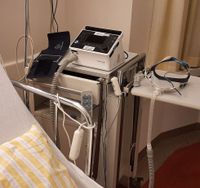
November 2025
My special thanks go to the team at the Heckeshorn Lung Clinic for their compassionate and patient care in helping me cope with my ALS diagnosis!
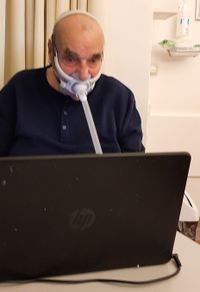
This clinic was founded in 1947 as a tuberculosis hospital on Lake Wannsee, near the Alsen Colony, and is one of Germany's leading centers for pulmonology and thoracic surgery. Since 2004, as part of the HELIOS Emil von Behring Clinic, it is the largest center for pulmonology and thoracic surgery in the Berlin-Brandenburg region, with 16,000 inpatient and outpatient treatments per year.
More content is being created for this page. Please visit this page again soon. Thank you for your interest!